





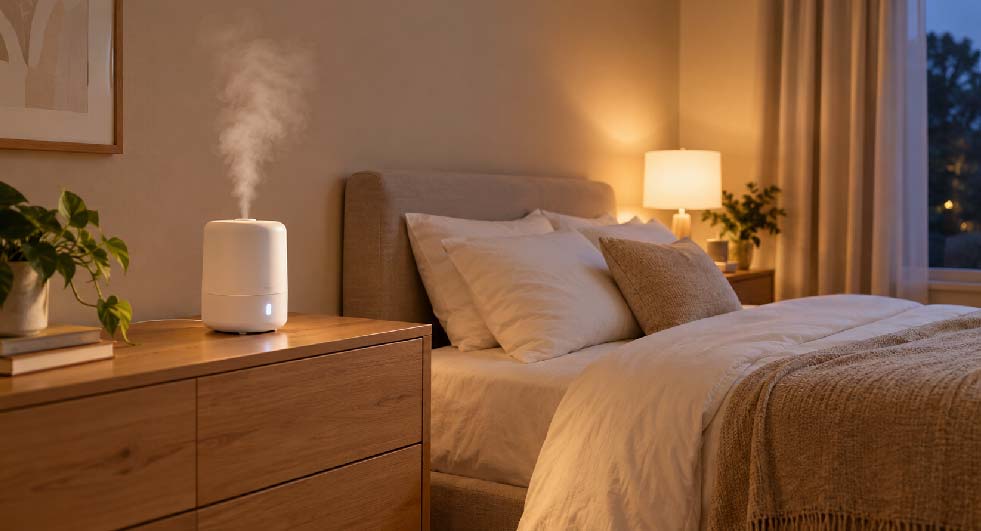

Humidifier Bedroom Placement: Where to Put It for Sleep
Put your bedroom humidifier on a flat, stable, water-resistant surface a few feet from the bed. Leave open space around it and aim the mist into the room, not at walls, bedding, or electronics. Exact distances vary by model, so follow your manual. The goal is to add moisture to the air without soaking the surfaces around the unit.
| Quick Facts | Guidance |
|---|---|
| Target indoor humidity | 30–50% (attributed to the EPA) |
| Surface | Flat, stable, water-resistant |
| Distance from bed | About 3 feet is a common suggestion; check your manual |
| Water | Distilled or demineralized |
| Cleaning | Every three days, plus daily water changes where possible |
Humidifier Bedroom Placement: The Core Rules
Start with the surface. A sturdy dresser or table keeps the unit stable, lowers the risk of spills and gives the mist room to disperse before it lands on anything. If your furniture is wood, a waterproof tray or mat underneath is a sensible precaution. Mayo Clinic advises keeping the area around a humidifier dry, which is the idea behind most placement advice.
Beyond that, consumer guides tend to agree on a few habits. No official standard sets exact distances, so treat these as rules of thumb and check your manual:
- Leave breathing room. Guides often suggest at least a foot between the unit and walls, furniture, curtains and appliances.
- Keep it off the pillow. About three feet from the bed is a common recommendation, so bedding doesn’t absorb the mist.
- Aim toward the center of the room, not at the headboard.
- Keep cords, outlets and electronics clear of the mist.
Spots to Avoid
Some locations work against you, even if they feel convenient.
- Right beside your pillow. Close placement can dampen sheets and blankets.
- Against exterior walls or beside cold windows. Moisture condenses on cold surfaces, and too much moisture can encourage mold or mildew.
- On soft surfaces. Rugs, bedding or cushions can soak up water and make the unit unstable.
- Next to electronics. Water and electrical equipment are a bad pairing.
- Within reach of children or pets. This matters most for steam vaporizers, covered below.
How Humidifier Type Affects Where It Goes
Mayo Clinic lists central, ultrasonic and impeller humidifiers among the common types. The type changes how careful you need to be.
Cool-mist units (ultrasonic and impeller). The priorities are keeping the mist away from bedding and walls and cleaning the tank often. Distilled or demineralized water may reduce mineral buildup and white dust in some models, which is one reason it is often recommended.
Steam vaporizers. The hot water inside can cause burns if spilled. Put them on a very stable surface, well out of reach of children and pets, with plenty of clearance.
Whole-house humidifiers connect to your HVAC system, so placement isn’t a decision at all.
Keeping Bedroom Humidity in a Healthy Range
Good placement can’t make up for too much moisture. The EPA recommends keeping indoor humidity between 30% and 50%. Going above 50% creates conditions for mold, dust mites and bacteria.
A small hygrometer (a humidity meter) takes the guesswork out. Check it near where you sleep, and turn the humidifier down or off if readings climb above the range. Foggy windows, damp-feeling air or a musty smell are also signs to cut back.
If you have asthma or allergies, talk to your doctor before using a humidifier. Mayo Clinic notes that humidifiers can make you sick if they are poorly maintained or if humidity stays too high.
Cleaning Habits That Matter as Much as Placement
A well-placed humidifier still needs upkeep. Mayo Clinic warns that dirty tanks and filters can grow bacteria and mold. Its tips for room humidifiers include:
- Use distilled or demineralized water, which has fewer minerals than tap water.
- Empty the tank, dry the inside and refill it with clean water, daily if possible for cool-mist and ultrasonic models.
- Clean the unit every three days and rinse the tank afterward.
- Drain and clean the humidifier before storing it.
Always follow the manufacturer’s instructions, since cleaning methods differ between models.
If you’re rearranging your room anyway, these quick bedroom makeover ideas can help you plan where everything goes.
Conclusion
The best spot for a humidifier in your bedroom is a dry, flat, stable surface with open space around it, a few feet from the bed and pointed into the room. After that, two habits matter most: keeping humidity in the 30–50% range and cleaning the unit regularly. When in doubt, your model’s manual outranks any general rule of thumb.
FAQs
Where should I put a humidifier in my bedroom?
Use a flat, stable, water-resistant surface such as a dresser, with open space on all sides. Aim the mist toward the room’s center, away from bedding, walls and electronics.
How close should a humidifier be to the bed?
There is no official distance. Consumer guides commonly suggest about three feet, but your manual’s guidance for your model comes first.
Is it OK to sleep with a humidifier on all night?
It depends on upkeep and humidity levels. Mayo Clinic says humidifiers can make you sick if they are poorly maintained or if humidity stays too high. Check the humidity with a hygrometer, clean the unit regularly, and talk to your doctor if you have asthma or allergies.
What humidity level is best for a bedroom?
The EPA’s commonly cited indoor range is 30–50%, with levels above that raising mold and dust mite concerns.
Can a humidifier cause mold?
A dirty or overused one can. Mayo Clinic says dirty tanks and filters can grow bacteria and mold, and excess humidity encourages mold growth in the room itself. Regular cleaning and humidity monitoring reduce the risk.