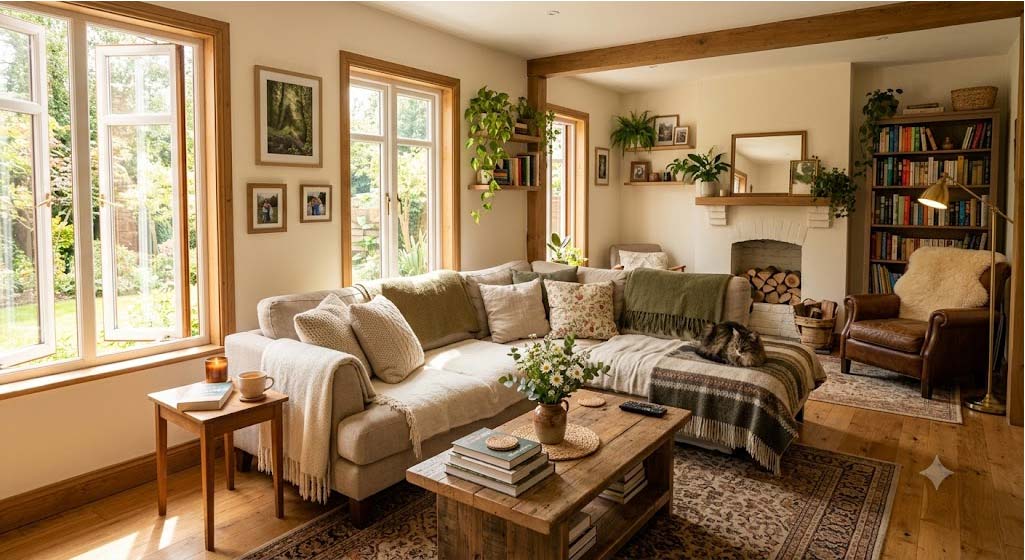







How to Hide Lamp Cords in the Middle of a Room (7 Genius Aesthetic Tricks)
The safest way to hide a lamp cord in the middle of a room is to route it along walls or furniture edges with a low-profile cord cover, or to switch to a rechargeable lamp. Avoid running cords under rugs, because covered cords can trap heat. The seven ideas below work for most rooms and many suit renters.
Start With Safety Before Style
Before hiding anything, know what not to do. The U.S. Consumer Product Safety Commission (CPSC) advises against running cords under carpets or rugs, since they prevent heat from being released by the cord. Its guidance on household extension cords also lists doorways and furniture as places to avoid, and says extension cords should only be used temporarily.
In practice:
- Keep cords visible enough to inspect for damage.
- Don’t staple or nail cords to walls or baseboards.
- Use a cord cover made for the job rather than burying a cord.
- Unplug and replace any cord that feels hot or looks frayed.
If you rely on an extension cord to reach a mid-room lamp, treat it as a stopgap and consider the permanent fixes in the fourth section.
Tricks That Route the Cord Along the Room’s Edges
Most of the visual clutter comes from the cord crossing open floor. These three ideas keep it to the perimeter.
1. Use a paint-matched cord cover. A low-profile floor cord cover sits flat, reduces tripping risk, and can be painted to match your baseboard or floor. Many are adhesive-backed, which suits renters, though you should test a small spot first.
2. Run the cord along the baseboard with adhesive clips. Clips hold the cord against the wall base so it follows the line of the room instead of cutting across it. Choose adhesive clips over nails, and leave the cord slightly loose so it isn’t pinched.
3. Tuck the slack behind a sofa or console. If the lamp sits beside or behind a sofa, run the cord down the back of the furniture and along the wall. A cord cover can bridge any open stretch. Make sure furniture isn’t crushing the cord.
Tricks That Use Furniture and Décor
Placement matters as much as concealment. Moving the lamp closer to something that naturally hides the cord is often easier than hiding a long run.
4. Anchor the lamp to a console table or sofa end. Placing a floor lamp directly behind a sofa or beside a console shortens the visible cord, and the furniture screens the rest.
5. Camouflage the cord with matching or textured cable. A fabric-wrapped cord in a color close to your floor or rug draws less attention. Plants and baskets can also break up sight lines, as long as nothing is stacked on the cord.
Permanent Fixes: Cordless Lamps and Added Outlets
If you want the cleanest look, remove the cord problem entirely.
6. Switch to a rechargeable lamp. Battery-powered table and floor lamps need no outlet. Runtime and brightness vary by model, so check the manufacturer’s specifications before buying.
7. Add an outlet where you need one. A licensed electrician can install an outlet or a floor-mounted receptacle. Wiring work is not a DIY project, and local codes and permits may apply. It costs more up front but removes the need for an extension cord.
Quick comparison
| Option | Best for | Trade-off |
|---|---|---|
| Cord cover | Renters, quick fixes | Still visible, though low-profile |
| Adhesive clips | Wall-hugging routes | Only works along edges |
| Rechargeable lamp | Open floor plans | Needs charging; fewer styles |
| New outlet | Long-term solution | Requires an electrician |
Common Mistakes to Avoid
- Hiding the cord under a rug. This is the most common shortcut, and the one regulators warn against.
- Overloading a power strip. Check the rating of any strip or cord against what’s plugged in.
- Leaving the cord taut. Tight cords strain the plug and are easier to trip over.
- Using nails or staples. These can pierce the insulation.
- Ignoring damage. Cracked insulation or exposed wire means the cord should be replaced.
Final Thoughts
Hiding a lamp cord in the middle of a room comes down to shortening the visible run, keeping it off high-traffic paths, and never trading safety for looks. Start with the simplest option, such as a cord cover or a better lamp position. If the problem keeps coming back, a rechargeable lamp or an added outlet is the lasting fix.
Once your cords are under control, you can focus on the lighting itself, and these cozy lighting ideas are a good place to start.
FAQs
Can you run a lamp cord under a rug?
Safety guidance from the CPSC says no. A rug can trap heat, and a cord you can’t see is harder to inspect for damage.
How do I hide a lamp cord with no outlet nearby?
Move the lamp closer to a wall or furniture, use a cord cover along the edge of the room, or choose a rechargeable lamp.
Will a cord cover damage my floor?
Adhesive-backed covers can leave residue on some finishes. Test a small hidden area first, or choose a non-adhesive weighted cover.
Are cord covers safe?
Covers designed for floor use are meant to protect a cord and reduce tripping, but they shouldn’t be used to bury a cord in a way that traps heat. Follow the product’s instructions and ratings.
What’s the best cordless option?
It depends on the room. Compare battery life, brightness, and charging method in each manufacturer’s specifications.
One response to “How to Hide Lamp Cords in the Middle of a Room (7 Genius Aesthetic Tricks)”
[…] How to Hide Lamp Cords in the Middle of a Room (7 Genius Aesthetic Tricks)October 4, 2026 […]